
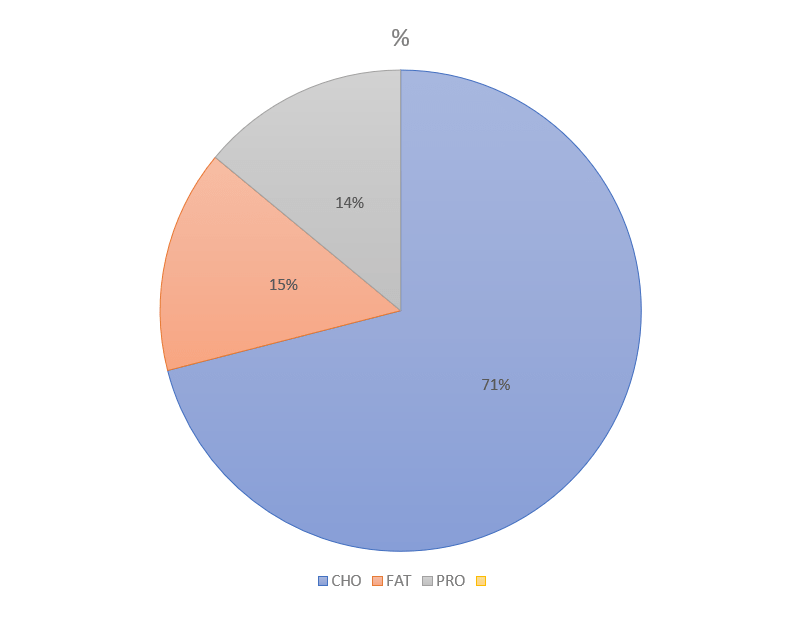
Intaking the correct number of calories, protein, carbohydrates and fats is key for a successful endurance runner as this allows energy balance to be maintained and recovery to be optimised. Typically, an ultra-marathon runner has a; high carbohydrate, low fat and recommended protein diet (Onywera et al., 2004). It has been recognised that 71% carbohydrates, 15% fat and 14% protein (Christensen et al., 2002). Making sure macronutrient intake is correct is important as this can determine the success of an athlete. This is because carbohydrates are for energy, protein is for repairing while fat is the predominant energy source during an event (Costill, (1988). Some endurance athlete’s intake more than 7000 calories per day but this depends on weight, gender and training.
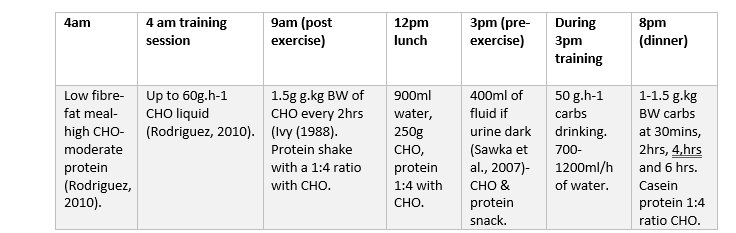
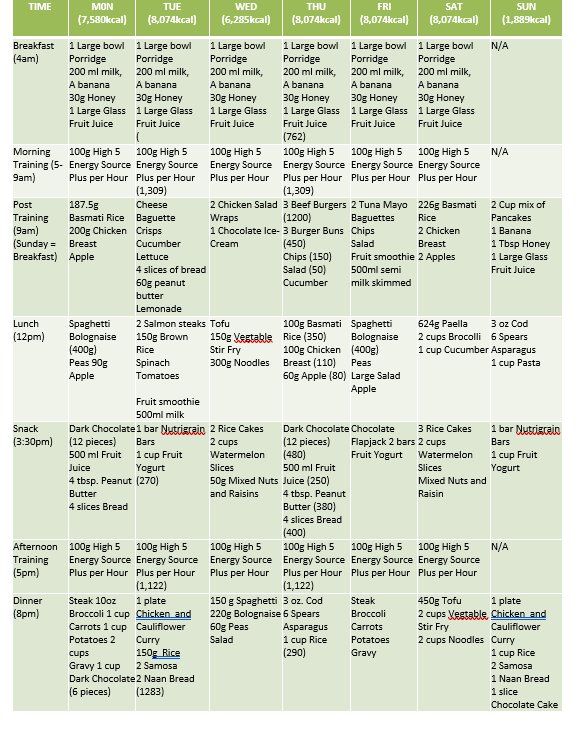
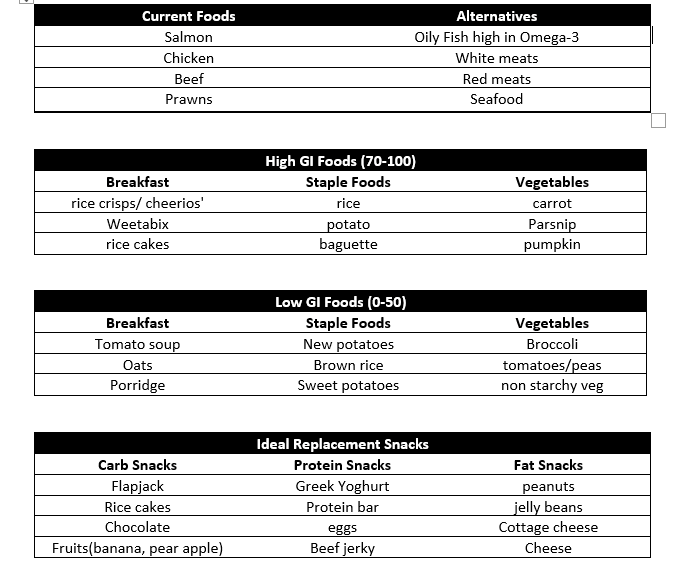
To match the recommended intake; an example of foods that could be eaten are in the table below.
It is important that athletes consider the types of food they include in their diet. With regards to the glycaemic index (GI), endurance athletes should eat low GI foods as this has been shown to improve endurance performance (Wu, C. L., & Williams, C, 2006). See example below.
References:
Rodriguez, N., Dimarco, N., & Langley, S. (2010). Nutrition and Athletic Performance. Medicine & Science In Sports & Exercise, 41(3), 709-731.
Ivy, J. L. (1998). Glycogen resynthesis after exercise: effect of carbohydrate intake. International journal of sports medicine, 19(S 2), S142-S145.
Sawka, M. N., Burke, L. M., Eichner, E. R., Maughan, R. J., Montain, S. J. and Stachenfeld, N. S. 2007. American College of Sports Medicine position stand: Exercise and fluid replacement. Medicine and Science in Sports and Exercise, 39: 377–390.
Onywera, V. O., Kiplamai, F. K., Tuitoek, P. J., Boit, M. K., & Pitsiladis, Y. P. (2004). Food and macronutrient intake of elite Kenyan distance runners. International journal of sport nutrition and exercise metabolism, 14(6), 709-719.
Christensen, D. L., Van Hall, G., & Hambraeus, L. (2002). Food and macronutrient intake of male adolescent Kalenjin runners in Kenya. British Journal of Nutrition, 88(6), 711-717.
Costill, D. L. (1988). Carbohydrates for exercise: dietary demands for optimal performance. International Journal of Sports Medicine, 9(01), 1-18.
Wu, C. L., & Williams, C. (2006). A low glycemic index meal before exercise improves endurance running capacity in men. International journal of sport nutrition and exercise metabolism, 16(5), 510-527.

