Downhill running can cause muscle damage which is due to the greater mechanical stress that is put onto the lower limbs. The study below found increases in inflammatory responses such as creatine kinase, myoglobin and strength during the downhill running. This is due to the increase in muscle deoxygenation because of the eccentric and concentric loads which have caused imbalances in oxygen delivery & consumption meaning athletes would start to fatigue (Vernillo et al., 2017). Vernillo et al., (2015) found that downhill energy cost increased by 13% in fourteen trained runners. It is important to note that eccentric training improves recovery time as well as over time is allows less swelling and delayed onset muscle soreness (DOMS) due to the changes in Creatine Kinase and Mitochondrial Biogenesis in the blood (Assumpção, Lima, Oliveira, Greco & Denadai, 2013).
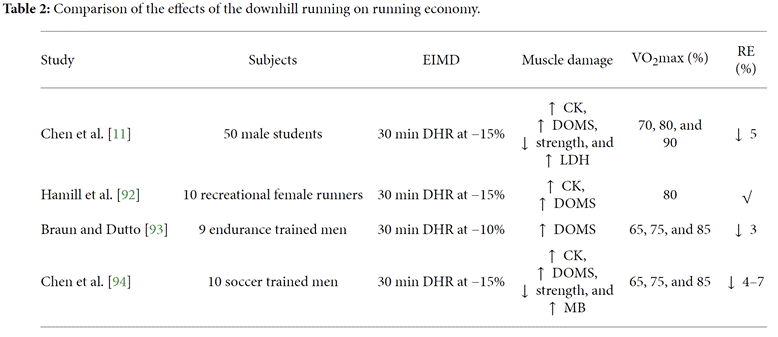
With, it would be a good intervention for athletes to take part in outdoor running on event terrain as well as running on a graded treadmill (-10%) to activate the sport specific muscles. Moreover, Branched-chain amino acids (BCAA’s) help decrease muscle damage and increase protein synthesis (Kim, Kim, Jeong & Lee, 2013). BCAA’s work by decreasing trytophan transport to the brain which then decreases serotonin and central fatigue during acitivty (Cordeiro et al., 2017). Therefore, outdoor running with the supplementation of BCAA’s helps reduce muscle damage over time and allow an anti-inflammatory response. Smart Link;}
References:
Vernillo, G., Brighenti, A., Limonta, E., Trabucchi, P., Malatesta, D., Millet, G., & Schena, F. (2017). Effects of Ultratrail Running on Skeletal-Muscle Oxygenation Dynamics. International Journal Of Sports Physiology And Performance, 12(4), 496-504.
Cordeiro, L., Rabelo, P., Moraes, M., Teixeira-Coelho, F., Coimbra, C., Wanner, S., & Soares, D. (2017). Physical exercise-induced fatigue: the role of serotonergic and dopaminergic systems. Brazilian Journal Of Medical And Biological Research, 50(12).
Vernillo, G., Savoldelli, A., Zignoli, A., Skafidas, S., Fornasiero, A., & La Torre, A. et al. (2015). Energy cost and kinematics of level, uphill and downhill running: fatigue-induced changes after a mountain ultramarathon. Journal Of Sports Sciences, 33(19), 1998-2005.
Kim, D., Kim, S., Jeong, W., & Lee, H. (2013). Effect of BCAA intake during endurance exercises on fatigue substances, muscle damage substances, and energy metabolism substances. Journal Of Exercise Nutrition And Biochemistry, 17(4), 169-180.
Assumpção, C. D. O., Lima, L. C. R., Oliveira, F. B. D., Greco, C. C., & Denadai, B. S. (2013). Exercise-induced muscle damage and running economy in humans. The Scientific World Journal, 2013.

