To improve adaptations, an intervention should focus on maximising PGC-1α levels. Peroxisome proliferator-activated receptor gamma coactivator 1 alpha (PGC-1α) is the main mediator for endurance adaptations. This includes; mitochondrial biogenesis which is the rate cells increase, angiogenesis which produces new blood cells and fat oxidation which is used for energy (Bar, 2014). Increasing mitochondrial biogenesis, angiogenesis and fat oxidation will therefore improve performance.
HIT sessions & Mechanisms
High intensity interval training has been shown to increase maximal aerobic speed. A study experimented with 16 trained male runners who had a VO2 max of 55 ml· kg-1·min-1 and carried out a field based maximal sprinting (4-7 bouts, 30 seconds max sprinting with four minutes recovery three times a week). It found a 42% increase in maximal aerobic speed in the first fourteen days (p<0.001). It is important to note that the proposed mechanics were because of an increase in citrate synthase and glycolytic enzymes (Zinner et al., 2016). It could be recommended that the study carries out a more effective VO2 max test as this would improve accuracy of the results. A control group may have also improved reliability (Koral, Oranchuk, Herrera & Millet, 2017). Moreover, a disadvantage of HIT training would be down to the risk of injury and the increase in metabolic stress.
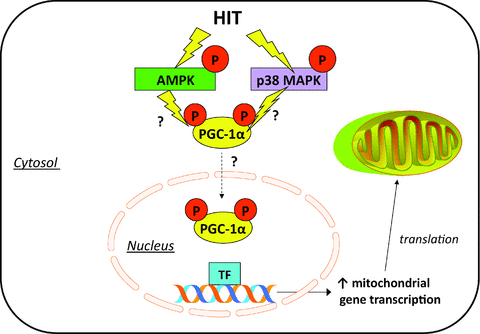
↑ AMPK + p38 MAPK
↑ PGC‐1α levels post exercise
Mitochondrial biogenesis
Which gives a greater oxidative phosphorylation and an improved capacity to utilize fatty acids during exercise.
It can therefore be recommended that anyone training for an ultra-marathon, uses HIT sessions during training. It can involve maximal uphill sprints (6 x 30 seconds with 4 minutes recovery three times per week). Uphill running increases energy cost (Vernillo et al., 2017), it demands more in the lower limbs from the incline which causes more activity in the quadriceps and hamstrings which will be beneficial as it will strengthen the leg muscles allowing to become more adapted to the event.
Fasted sessions
Fasted and low glycogen training increases AMPK and p38 MAPK which therefore increases PGC-1α levels. A study by Jeukendrup (2017) examined 20 males over four weeks. It involved running at 75% VO2 max for 60-90 minutes in duration. Citrate synthase increased by 47% and β-hydroxyacyl coenzyme A dehydrogenase increased by 34% in fasted individuals (P < 0.05). This has been associated with the increase of oxidative capacity and an increase in fat utilisation. A recommendation would be for athletes/clients to have long sessions (60 minutes plus) before breakfast but at low intensity. It is appropriate to have caffeine during the fasted running, it has been advised 3 mg·kg−1 caffeine at least 15 minutes before (Goldstein, 2010).
References:
Baar, K. (2014). Using Molecular Biology to Maximize Concurrent Training. Sports Medicine, 44(S2), 117-125.
Zinner, C., Morales-Alamo, D., Ørtenblad, N., Larsen, F., Schiffer, T., & Willis, S. et al. (2016). The Physiological Mechanisms of Performance Enhancement with Sprint Interval Training Differ between the Upper and Lower Extremities in Humans. Frontiers In Physiology, 7.
Koral, J., Oranchuk, D., Herrera, R., & Millet, G. (2017). Six Sessions of Sprint Interval Training improves running performance in trained athletes. Journal Of Strength And Conditioning Research, 1.
Gibala, M., Little, J., MacDonald, M., & Hawley, J. (2012). Physiological adaptations to low-volume, high-intensity interval training in health and disease. The Journal Of Physiology, 590(5).
Vernillo, G., Brighenti, A., Limonta, E., Trabucchi, P., Malatesta, D., Millet, G., & Schena, F. (2017). Effects of Ultratrail Running on Skeletal-Muscle Oxygenation Dynamics. International Journal Of Sports Physiology And Performance, 12(4), 496-504.
Goldstein, E., Ziegenfuss, T., Kalman, D., Kreider, R., Campbell, B., & Wilborn, C. et al. (2010). International society of sports nutrition position stand: caffeine and performance. Journal Of The International Society Of Sports Nutrition, 7(1),5.
Jeukendrup, A. (2017). Periodized Nutrition for Athletes. Sports Medicine, 47(S1), 51-63.

